
For decades, the conference room was the heart of office life, the setting for big decisions, presentations, and team gatherings under white lights and long tables. But as modern work has evolved, its inefficiencies have become impossible to ignore. Steelcase research shows that large, formal boardrooms now sit empty for most of the day and no longer support the diverse ways people work.
The classic conference room was designed for a pre-pandemic world of predictable schedules and in person meetings, which often create unnecessary formality and make it tough for everyone to be seen and heard. Meanwhile, the nature of collaboration has fundamentally changed: hybrid meetings are standard, teams are smaller and more fluid, work modes shift constantly, and people need environments that support both structure and spontaneity. As a result, it’s time to redesign the conference room into more a more useable ecosystem!
Introducing the Conference Room Ecosystem!
Today’s workplaces no longer depend on a single conference room. Instead, they rely on a flexible ecosystem of purpose-built spaces, each designed to support a specific type of collaboration. By breaking the conference room into its essential zones, organizations create environments that better match how people actually work.
Zone 1: The Huddle Space
A small, tech-forward space for fast syncs, hybrid check-ins, and real-time problem solving.
What it replaces: the “small meeting” that never needed a big room.
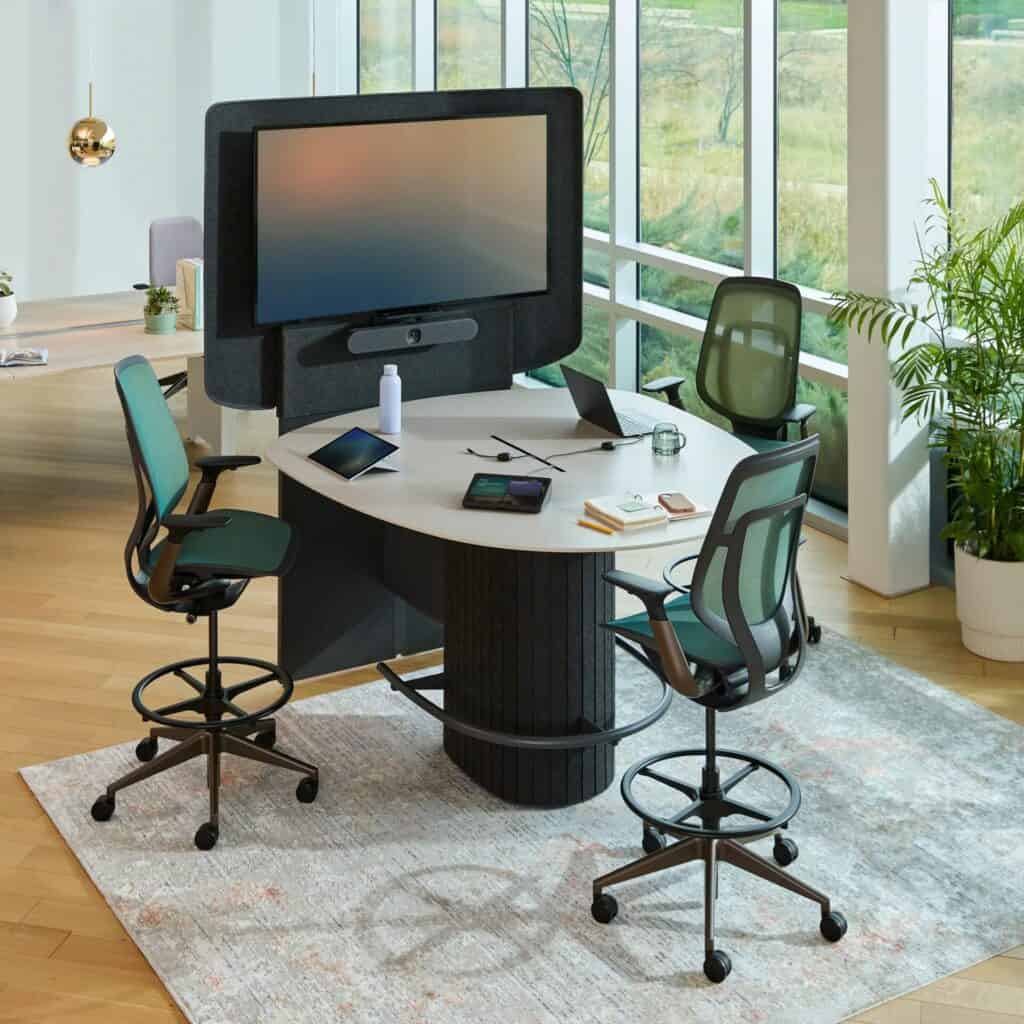
Collaboration often happens in small team sizes. Having smaller huddle spaces offer better hybrid experience and will be regularly used more than the large conference room.
The Steelcase Ocular Coupe Tower creates a focused, tech-ready hub designed for seamless hybrid collaboration, ensuring that remote and in-person participants experience equal engagement. Paired with the lightweight, ergonomic Steelcase Karman Chair, the space supports real-time problem solving with comfort.
Zone 2: The Meeting Room
A strategic room for decision-making and executive discussions.
What it replaces: the traditional conference room.
Steelcase research states that large conference rooms create unnecessary formality and weaken participation. As a result, smaller, intentionally designed rooms promote inclusion and better communication. Additionally, smaller meeting spaces with sightlines and technology ensures that everyone is seen and heard.
The Orangebox Camper provides a quiet, enclosed setting that fosters engagement and productive discussion without the heaviness of a traditional conference room. The Coalesse MoreThanFive Table and Viccarbe Maarten Chair create an inviting environment with ideal sightlines and comfort, supporting decision making and executive conversations.

Zone 3: The Gathering Alcove
A space for rehearsing, gathering thoughts, or decompressing before and after the meeting.
What it replaces: pacing in the hallway waiting for the room to free up.
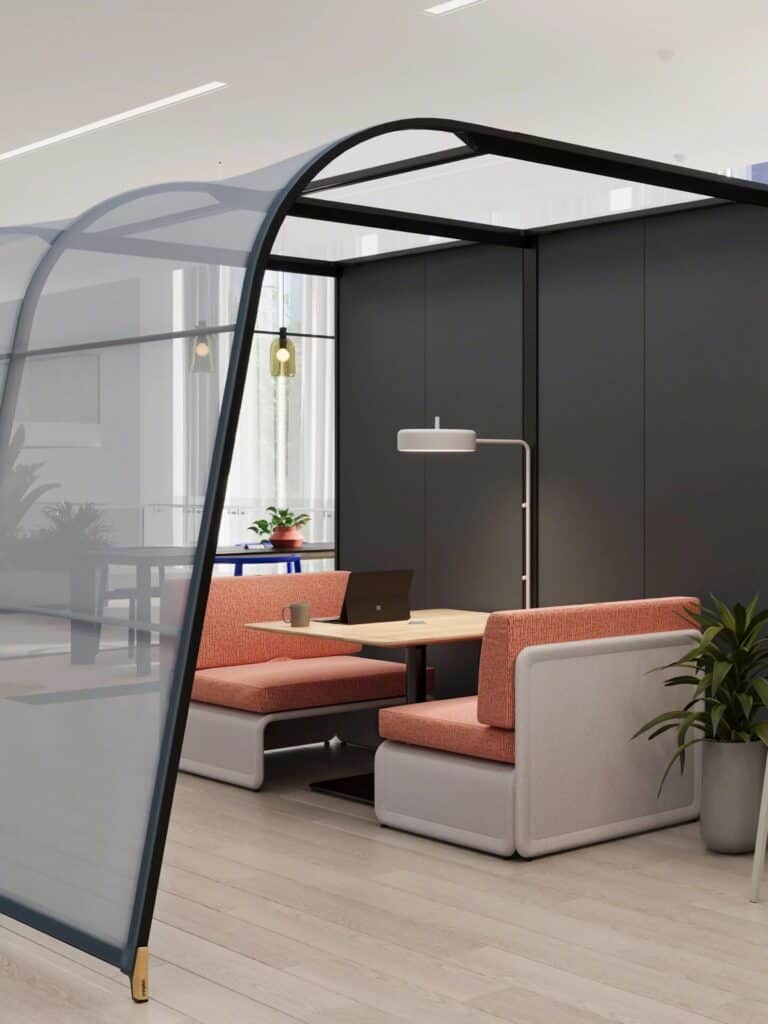
The need for small ‘transitional’ zones where people can rehearse, transition, regroup, or debrief are essential. These spaces dramatically improve performance by helping people prepare before meetings and reflect afterward.
The Orangebox Camper & Dens Awning create a soft, sheltered retreat ideal for mentally regrouping before meetings or decompressing afterward. Combined with the relaxed posture of Coalesse Lagunitas lounge seating and table, the alcove supports reflection, preparation, and casual conversation that improves meeting performance.
Zone 4: The Social Spillover Space
For informal “meeting after the meeting” social and idea-generation conversations.
What it replaces: awkwardly lingering in the doorway.
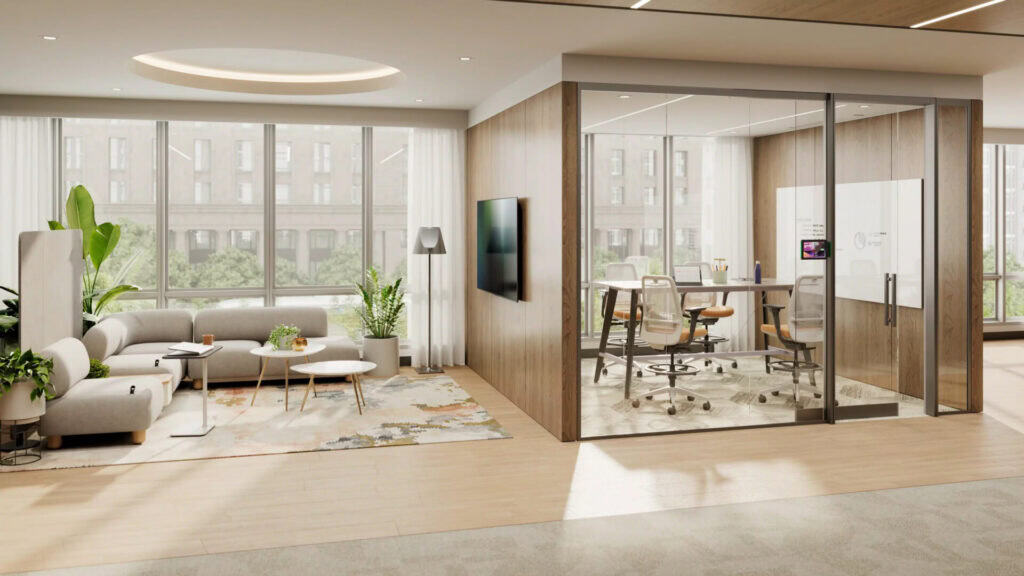
Vibrant, employee-centered workplaces should intentionally create social spaces that encourage connection and informal dialogue. Social spaces are often just as important as the formal meeting due to the relaxed environment which leads to idea sharing.
The Coalesse Ensemble Lounge System offers a comfortable, open setting perfect for post meeting conversations that foster connection and shared insight. With flexible, easy to pull West Elm Lily Pad nesting tables, the space naturally encourages the kind of relaxed, spontaneous dialogue that often leads to breakthrough ideas.
Zone 5: The Brainstorm Lab
A dynamic environment for creativity, movement, and idea generation.
What it replaces: the non-creative brainstorm session in the conference room.
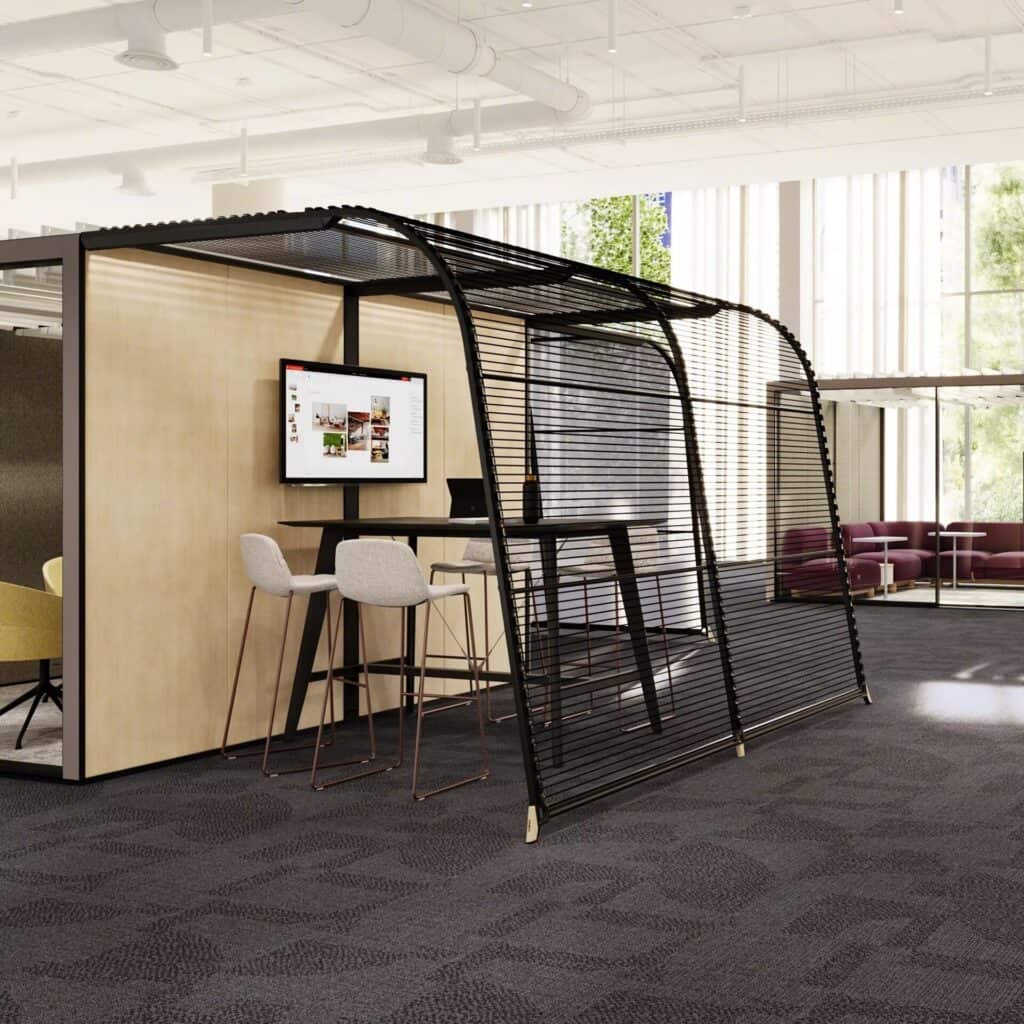
It is known that creative sessions often benefit from high tables, standing postures, movement, markerboards, and digital tools that encourage interaction, rather than a formal meeting room.
The Orangebox Camper & Dens Awning offers a semi-open creative canopy that encourages movement and spontaneous idea sharing. Paired with the Orangebox Cubb Project Table and the supportive, elevated Viccarbe Copa High Chair, the environment naturally promotes active postures, and energetic collaboration for brainstorming.
Adopting a conference room ecosystem with various zones will transform how people work: meetings become more intentional, collaboration feels more natural, hybrid gets easier, and spaces flex to support different needs. The office starts to feel like a destination again and most importantly, people feel seen, supported, and able to do their best work.

references: https://www.steelcase.com/research/articles/rethinking-the-key-spaces-people-need-to-work-better-before-after/