
As work evolves, the office is no longer just a place to sit at a desk, it’s an ecosystem designed to support human brains and digital technology working side by side. Two major forces are shaping this transformation: the growing need to protect cognitive health and the rise of artificial intelligence (AI) in the workplace. Together, they require a new approach to office design, one that prioritizes wellbeing while enabling seamless collaboration between people and technology.
Why Brain Health Matters More Than Ever
Work now a days is more mentally demanding than ever. Employees juggle constant notifications, tight deadlines, and complex problem-solving. According to Steelcase research, cognitive overload and stress are among the biggest challenges facing today’s workforce. As a result of this, when the brain is under stress, creativity and effective decision-making suffer.
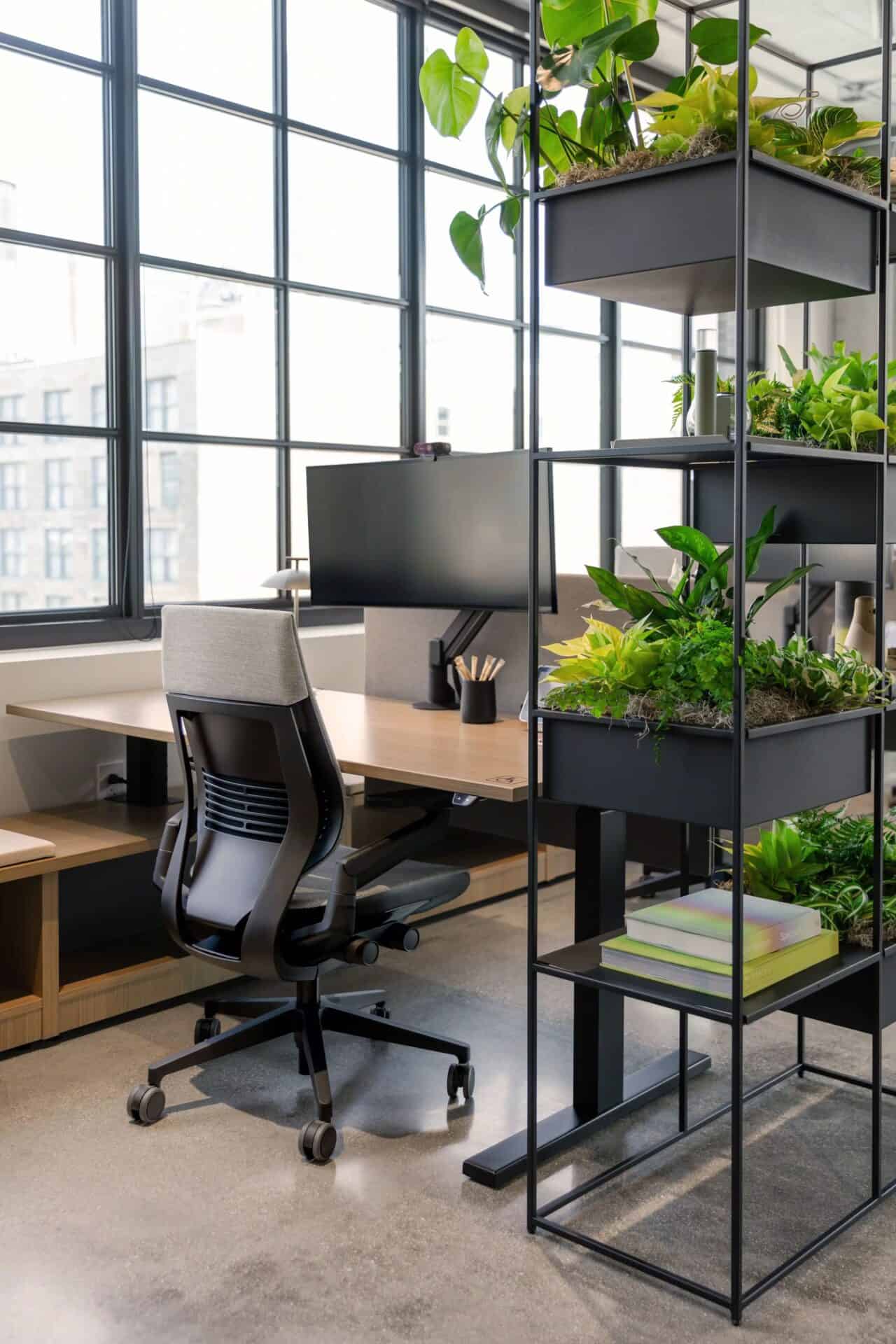
However, thoughtful office design can significantly support and enhance brain health. Spaces that incorporate natural light, biophilic elements, and quiet zones help reduce stress and restore focus.
Explore our blog, “Six Key Dimensions of Wellbeing at Work,” for a deeper dive into this topic and discover how to build an office culture that puts employee wellbeing front and center.

AI and Brains: A New Workplace Dynamic
Office design isn’t just about supporting mental wellbeing anymore, with the rise of AI, it has become a vital part of the conversation. Steelcase’s article on “Bots and Brains” highlights that technology isn’t replacing humans, it’s ‘augmenting’ them. AI can handle repetitive tasks and data analysis, allowing people to focus on creativity and strategic thinking.
But this shift requires changes; workplaces must encourage learning and adaptability, with environments where humans and AI to collaborate effectively. This means designing spaces that support both tech integration and human connection.
Discover and learn exactly how AI is transforming the workplace, especially within the furniture industry, in our blog below.
So, what does a workplace look like when it supports both brain health and AI collaboration? Here are some design tips for you!
Zones for Both Deep Work and Collaboration
Steelcase Flex Active Frames are a great boundary solution, as they establish clear, defined territories between groups and zones. The Flex Active Frames are versatile building blocks that optimize floorplans by creating team neighborhoods. Beyond dividing space, their multi-functional design fosters collaboration and supports teams in doing their best work.


Smart Environments
Orangebox Campers & Dens simplifies workspace design by eliminating the complexity of fixed solutions with technology. Each Camper includes integrated lighting, air circulation, and power. Features like automatic lighting, fan, and roof activation ensure convenience. Add cabins and awnings to create customizable privacy layers that support individual needs and organizational goals.
Digital Detox Spaces
Wellness Rooms can bring a lot of value to a workplace. This wellness planning idea is an immersive space designed for employees to recharge, refocus, and relax throughout the day. It features organic shapes, natural materials, and customizable lighting. As a result, it allows the space to be easily personalized and adapt to different moods which elevates the overall user experience.


Digital Detox Spaces
Steelcase Ocular Coupe Towers make hybrid meetings feel effortless. Their sleek design brings people together—whether in the room or joining remotely. With built-in features that keep screens, cameras, and connections organized, everything looks clean and works smoothly. Easy to set up and simple to use, these towers create a comfortable, collaborative space where technology blends naturally into the meeting experience.
The future of workplace design isn’t just about where we work, it’s about how we think, feel, and collaborate with AI technology. By designing environments that protect brain health and embrace AI, organizations can unlock the full potential of both their employees and their digital partners.
references:
https://www.steelcase.com/research/articles/topics/design/how-office-design-can-boost-brain-health/
https://www.steelcase.com/research/articles/topics/culture-talent/from-the-editor-bots-and-brains-need-a-new-workplace/